

 Jumoka Cobbs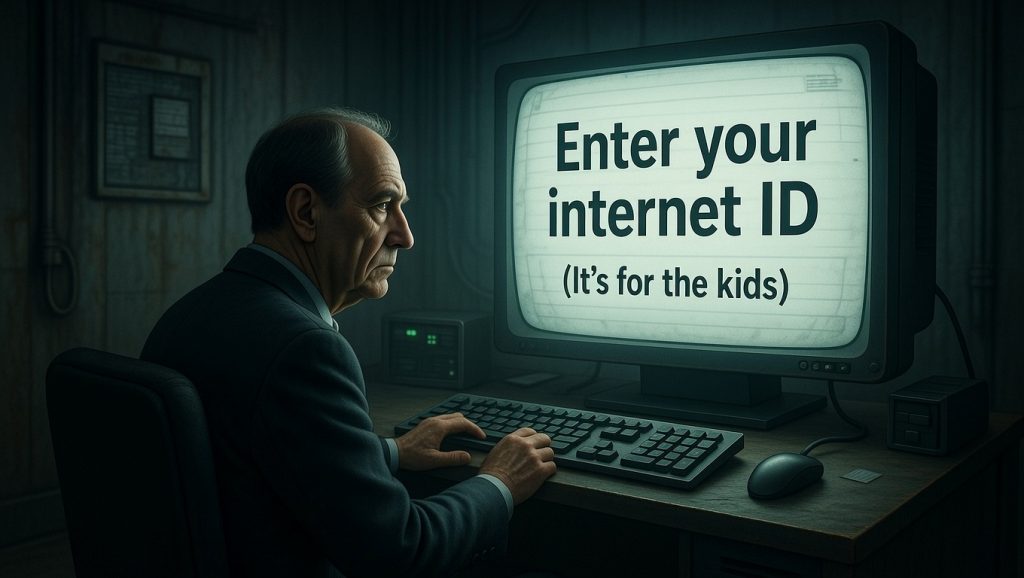
They Say It’s For The Kids: The Age Verification Takeover That’s Really About Tracking Your Every Move
What’s up fellow techies, and buckle up because we need to talk about something that’s been creeping across the internet like a digital plague: age verification requirements. And yeah, I know what they’re telling you—”It’s for the children!” “We’re protecting kids!” But let’s be real for a minute. When has “think of the children” ever been used for anything other than stripping away your rights?
ChatGPT just joined the party this week, rolling out age verification to all users globally. And they’re not alone. Half the United States now requires you to upload your government ID or scan your face just to access legal content on the internet. Let that sink in.
We’re watching the death of anonymous internet access happen in real-time, and they’re gift-wrapping it as child safety legislation. Spoiler alert: it’s not really about the kids.
The Age Verification Avalanche
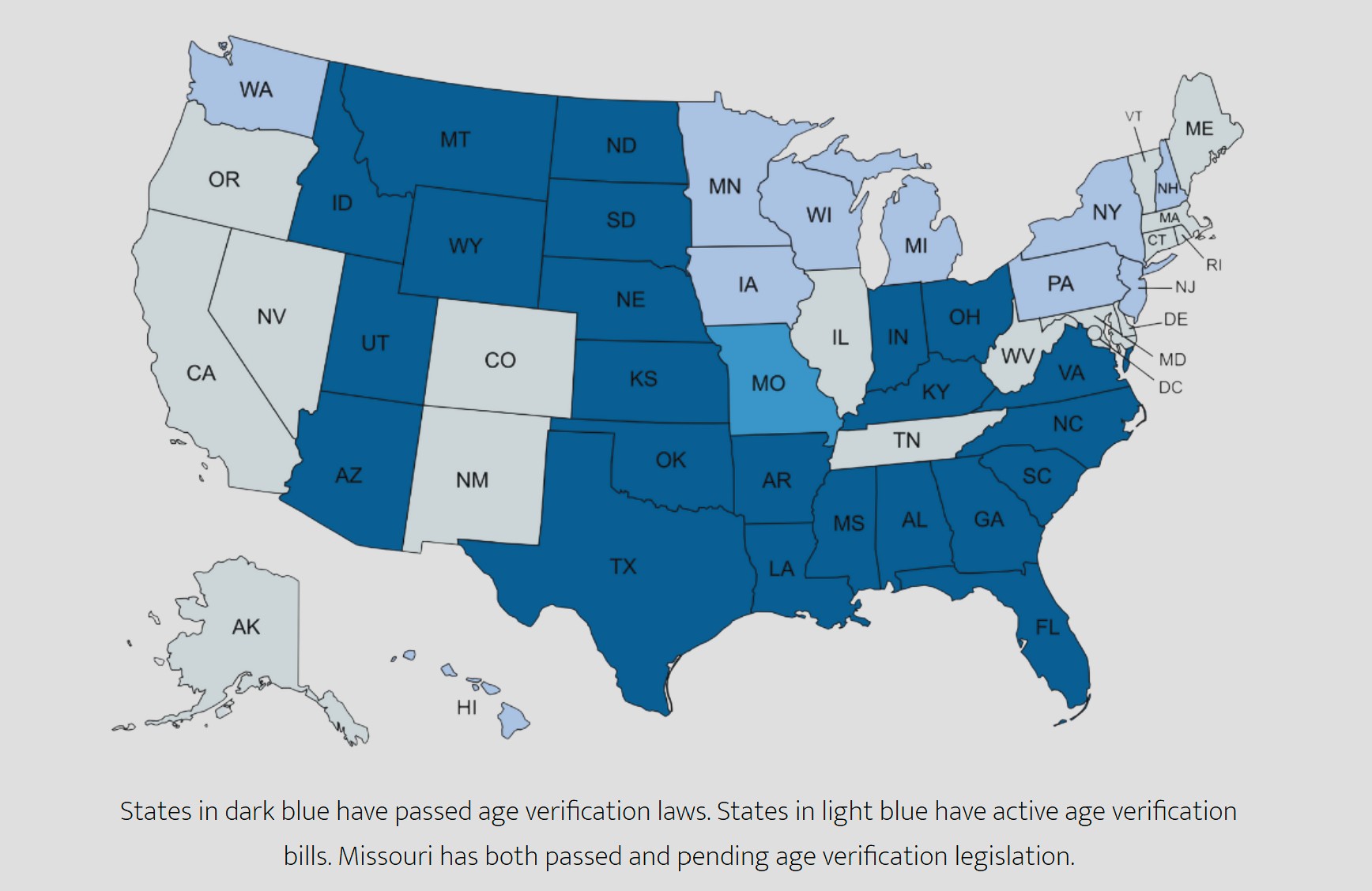
(Source: https://dailycitizen.focusonthefamily.com/)
Let me lay out just how bad this has gotten. Half of the U.S. now mandates age verification for accessing adult content or social media platforms. Nine states saw their laws take effect in 2025 alone, with more coming in 2026.
That’s not a typo. Half the country now requires you to prove who you are before accessing perfectly legal content. We’re talking Louisiana, Utah, Texas, Virginia, Mississippi, Arkansas, Montana, North Carolina, Idaho, Kansas, Indiana, Kentucky, Nebraska, Florida, Tennessee, South Dakota, Ohio, and more states piling on every month.
But it’s not just America. The UK’s Ofcom announced that all sites allowing pornographic content must have “strong age checks,” and Australia is implementing a two-part plan starting December 2025 for search engines and internet providers, followed by March 2026 for websites, social media, AI chatbots and even device makers.
Device makers. Let me repeat that. Your phone, your computer, your tablet—they want age verification baked into the operating system itself.
ChatGPT Joins The Surveillance Party
This week, OpenAI rolled out what they’re calling “age prediction” for ChatGPT. The model relies on a combination of account-level signals and behavioral signals, including usage patterns over time, how long an account has existed, the typical times of day a user is active and the user’s stated age.
Translation: ChatGPT is now analyzing everything you do to guess how old you are. Every message you send, every time you log in, every topic you discuss—it’s all being fed into an AI model that’s building a profile of you.
And here’s the kicker: if users are incorrectly identified as being under 18, they will have to use the identity-verification service Persona to restore their full access. You know what Persona requires? A live selfie using your phone or webcam where the camera scans your face, asking you to turn left and right, or uploading a photo of a government-issued ID, such as a driver’s license, passport, or state ID.
So let’s recap: ChatGPT is constantly monitoring your behavior to age-profile you, and if their AI gets it wrong, your only option is to hand over biometric data or government documents to a third-party company.
Still think this is about protecting kids?
“But It’s For The Children!”
Look, I get it. Nobody wants kids accessing inappropriate content. That’s a legitimate concern. Parents should have tools to protect their children online. It’s not the role of government to protect your child; that’s your job. But here’s the thing: these laws don’t actually protect kids.
You know how kids have been bypassing age gates since the internet began? By lying about their age. You know how kids will bypass these new laws? By using a VPN, asking older siblings for credentials, or just… lying about their age again.
Age-verification measures censor the internet and burden access to online speech. Though age-verification mandates are often touted as “online safety” measures for young people, the laws actually do more harm than good. They undermine the fundamental speech rights of adults and young people alike, create new barriers to internet access, and put at risk all internet users’ privacy, anonymity, and security.
The Electronic Frontier Foundation—one of the most respected digital rights organizations in the world—has been screaming about this. They literally created an entire resource hub at EFF.org/Age just to help people understand how dangerous this trend is.
What They’re REALLY Building: Your Internet ID
Here’s what nobody wants to say out loud: these laws aren’t designed to protect children. They’re designed to end anonymous internet access. Period.
Think about what’s actually happening here:
Step 1: Pass laws requiring age verification “for the children”
Step 2: Force every website, app, and platform to collect identification data
Step 3: Normalize the idea that you need to prove your identity to access any content
Step 4: Connect all that data across platforms
Step 5: Congratulations, you now have a complete internet ID system where every click is tracked
Don’t believe me? Some laws like Michigan’s SB284/HB4429, the Digital Age Assurance Act, would require device manufacturers to share an age signal via an API when a user attempts to access any site or app that requires age verification.
They want your phone to broadcast your age status to every website you visit. That’s not child protection—that’s building infrastructure for mass surveillance.
The Privacy Nightmare Is Already Here
“But they’ll keep the data secure!” I can already hear the bootlickers saying it. Oh really? In October 2025, a breach of a third-party vendor used by Discord led to the exposure of approximately 70,000 government ID photo.
Seventy thousand government IDs. Just leaked. Gone. In the wild. And that’s just the breach we know about. How often do you check the news and hear about data breaches, which only seem to be increasing every year.
When you upload your driver’s license or passport to verify your age, that data has to go somewhere. It has to be stored, processed, and transmitted. Once this data is collected, it becomes a permanent honeypot for hackers.
And let’s not forget who’s accessing this data; Governments, Tech companies, and third-party verification services. Every single one of them now has a complete profile of what you’re accessing online, when you’re accessing it, and your full identification documents to tie it all together.
It’s Working Exactly As Intended
Here’s the thing that really gets me: the laws are written so broadly that they capture way more than just adult content; Social media, AI chatbots, video sharing platforms, gaming sites. Australia’s law is noteworthy for how widely it defines what sites count as social media, as it includes sites such as Reddit and Kick alongside more traditional social media platforms like TikTok and Snapchat.
You want to browse Reddit? Prove your age. Want to use ChatGPT for work? Hand over your ID. Want to watch YouTube videos? Better scan your face.
This isn’t about a few adult websites. This is about requiring identification to access the entire internet. And it’s already happening.
2025 was the year age verification went from a fringe policy experiment to a sweeping reality across the United States. We crossed the threshold. The age-gated internet isn’t some dystopian future—it’s right now, today.
They’re Normalizing Surveillance
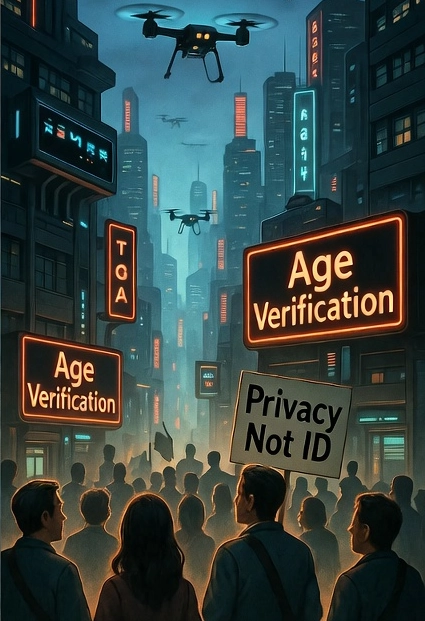
The scariest part? It’s working. People are just… accepting it. “Well, if you have nothing to hide…” “It’s just for porn sites, who cares?” “At least they’re protecting the kids.”
No. Nope. Hell no.
Every freedom you give up “for your safety” never comes back. Every surveillance system built “for the children” ends up used for control. This is how it always works.
They start with something everyone agrees is bad—child exploitation, terrorism, whatever—and they use that moral panic to build systems of control. Then, once the infrastructure is in place, mission creep kicks in. Suddenly your age verification system is also checking for “misinformation” or “extremist content” or “copyright violations.”
Don’t think it’ll happen? It’s already in the laws. The UK’s Online Safety Act requires platforms to deploy age verification measures to block minors from harmful material online, but it doesn’t just focus on porn sites. It requires all platforms to check for risks to children and take action to protect minors—whether that’s user-generated content, social media posts, or any other material kids might see online.
See how that works? “Harmful material” can mean anything they want it to mean.
What You Can Do About It
Look, I’m not naive. These laws are passing. The verification requirements are rolling out. ChatGPT, Google, social media platforms—they’re all implementing these systems whether we like it or not.
But here’s what you can do:
Use a VPN. Yeah, I know, it’s a cat-and-mouse game. But right now, VPNs still work to bypass age verification in most places. The fact that VPN usage has exploded in states with age verification laws tells you everything you need to know about whether people actually support this.
Support digital rights organizations. The EFF, nd similar groups are fighting these laws in court. Some have already been struck down or blocked. Your support matters.
Make noise. Contact your representatives. Make it clear you don’t support internet ID systems masquerading as child protection. Vote for people who actually care about privacy.
Be smart about what data you share. If you absolutely must verify your age, understand that data is now out there forever. Use services that claim to delete verification data quickly, but honestly? Trust nobody.
The Bottom Line
Let’s cut through the BS: age verification mandates are not about protecting children. If they were, they’d be focused on actual child safety measures like better education, parental controls that don’t require mass surveillance, and holding predators accountable.
Instead, what we’re getting is a system that:
- Requires adults to prove their identity to access legal content
- Creates massive databases of who’s accessing what online
- Normalizes constant surveillance and tracking
- Builds infrastructure that can (and will) be expanded for other purposes
- Does virtually nothing to actually protect kids
They’re building the internet ID system right in front of your face, and they’re doing it by saying “but think of the children!”
Don’t fall for it. This isn’t about kids. It’s about control. It’s about surveillance. It’s about ending the last vestiges of anonymous internet access.
And ChatGPT just became part of the machine.
Your Turn
Get down in that comments section and tell me: Are you accepting these age verification requirements? Using a VPN to bypass them? Already handed over your ID like it’s no big deal? I want to hear where you stand on this because it’s only going to get worse from here.
Stay nerdy, friends. And more importantly, stay free.
“Those who would give up essential Liberty, to purchase a little temporary Safety, deserve neither Liberty nor Safety.” – Benjamin Franklin
Turns out, he was right.